Pressure-test your planning system. See where it breaks.
Take the Stress TestYes. Tell me more.

Your Business Outgrew Your Planning Platform.

Fintastic is the enterprise planning and analysis platform built with AI at its core, where every model scales, every scenario runs in seconds, and every team works from one source of truth.

Finance, Revenue, Workforce, Marketing, and IT all work from the same model. No reconciliation. No conflicting versions. No waiting for someone else's numbers.
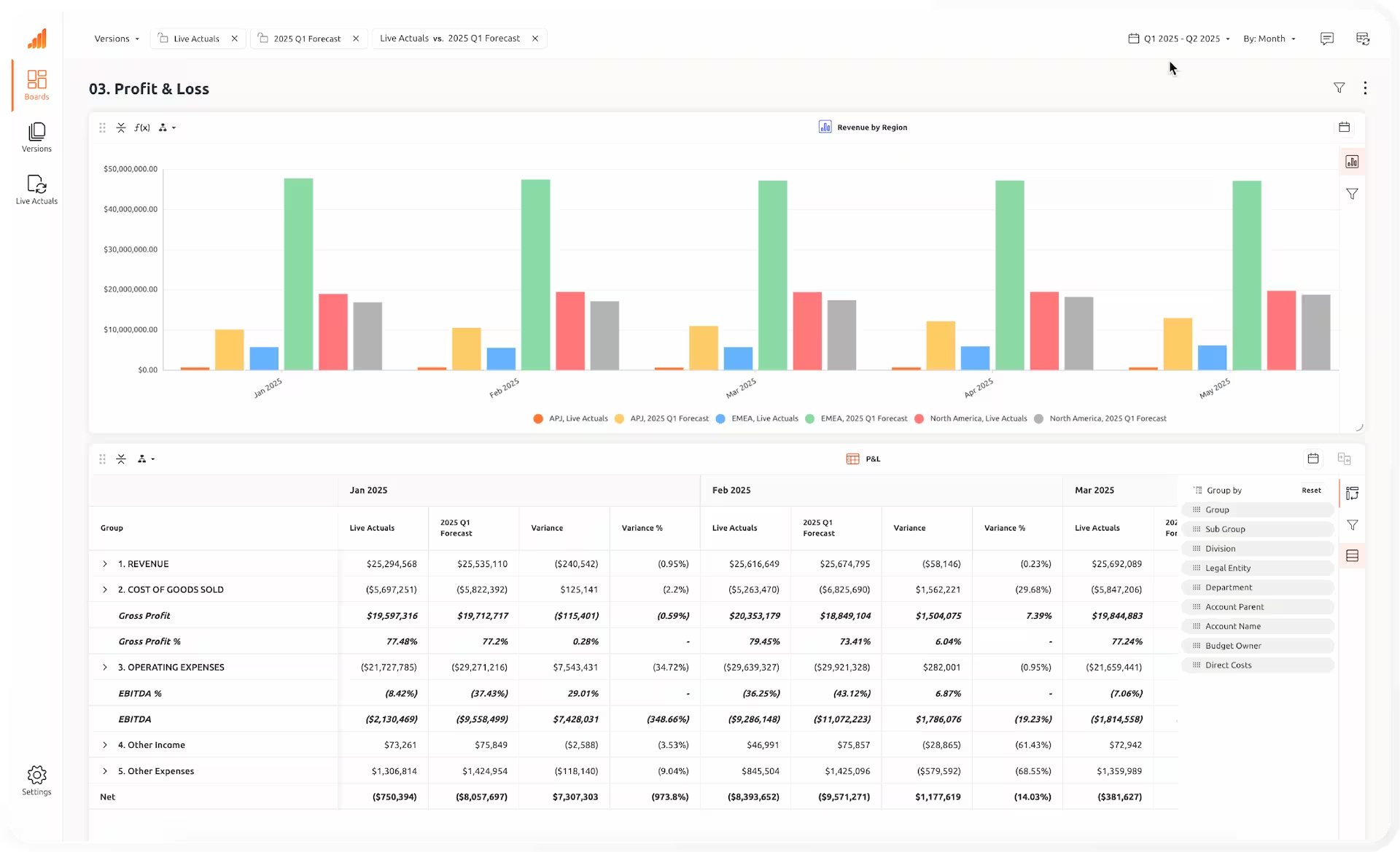

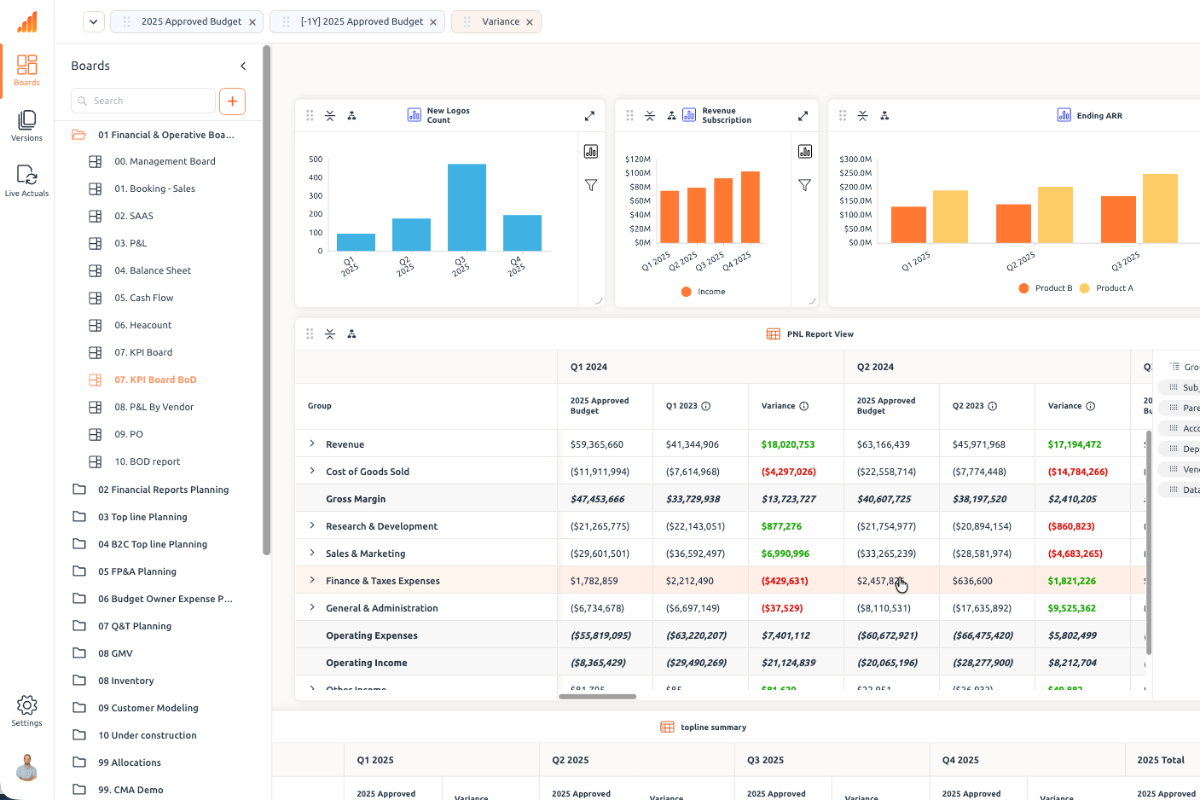
Dashboard showing profit and loss data with live actuals, forecasts, and variance analysis
Trusted by Teams at:

Planning Doesn't Break Because of People. It Breaks Because of Technology.

You've seen it happen. As your business scales, your planning tool starts working against you instead of for you.

Models become too large and slow down. You split them into smaller pieces just to keep things running. Different teams work from different versions of the same data. Every cycle becomes a coordination exercise instead of a strategic one.

It’s not a people problem. It’s not a technology problem. Legacy platforms were designed for annual budgets and static models, not for organizations running multiple concurrent scenarios across finance, revenue, workforce, and operations at once. Fintastic was built differently.

Fintastic platform showing financial planning without model limits

One Model. Real-Time Calculations. No Limits on Complexity.

Most planning platforms were designed for simpler problems. As customers demanded more, they added features, modules, and workarounds as complexity grew, but never changed the underlying architecture. The result is a platform that slows down and breaks exactly when you need it most. We did it differently, from the grounds up. The result is a platform that handles enterprise-scale complexity without compromise or performance trade-offs.

Unified model icon

One Unified Model

Every team, every plan, every scenario operates within a unified model. No fragmented modules. No disconnected data. When one assumption changes, every dependent factor updates immediately across the board

Real-time calculations icon

Real-Time at Any Scale

Calculations run in seconds, not minutes, regardless of how many dimensions, entities, users, or scenarios your model contains. Performance doesn't degrade as complexity grows. It was built to handle it.

Real-time calculations icon

Unlimited Concurrent Plans and Scenarios

Every version runs independently with its own logic, data, and structure. Teams can explore freely without disrupting operational plans or waiting for other users to finish their analysis.

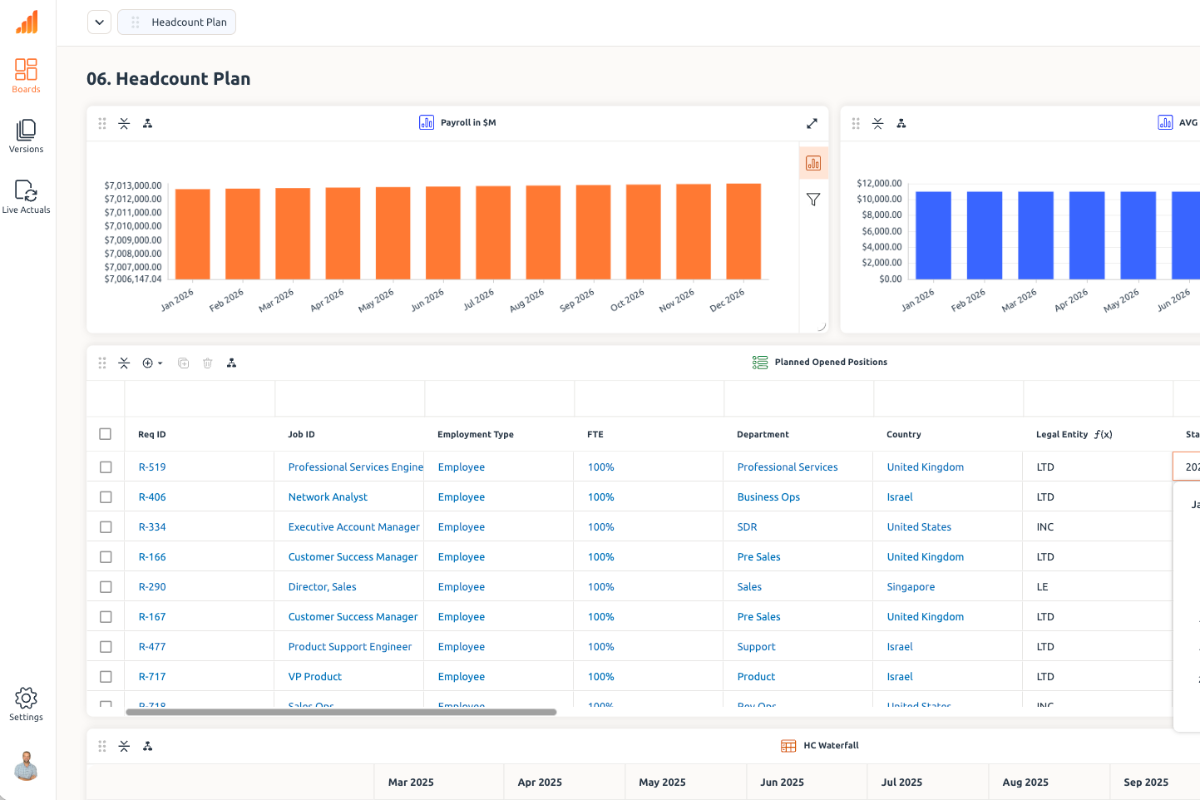
Fintastic technology platform showing real-time calculation engine and unified model architecture

From 15 Minutes Across 5 Models to 13 Seconds in One Full Model.

One of our customers replaced an enterprise legacy planning platform that couldn't keep up with the speed and complexity of their business. Here's what changed.

15 min across 5 models

13s

Scenario Calculation

~98% Faster

5 disconnected

1

Unified Model

End-to-End

2-5 users (freezes)

20+

Concurrent Users

10-20x More

~1 hour

<5m

Actuals Import

~90% Faster

15 min

<3m

Export to BigQuery

~80% Faster

3 months

3-4 Weeks

Model Builder Ramp

~65-75% Faster

What Teams Actually Get When the Platform Gets Out of the Way.

Faster Decisions, Not Faster Reports

When scenarios calculate in seconds instead of minutes, the conversation changes. Teams stop debating data accuracy and start debating strategy.

See How it Works
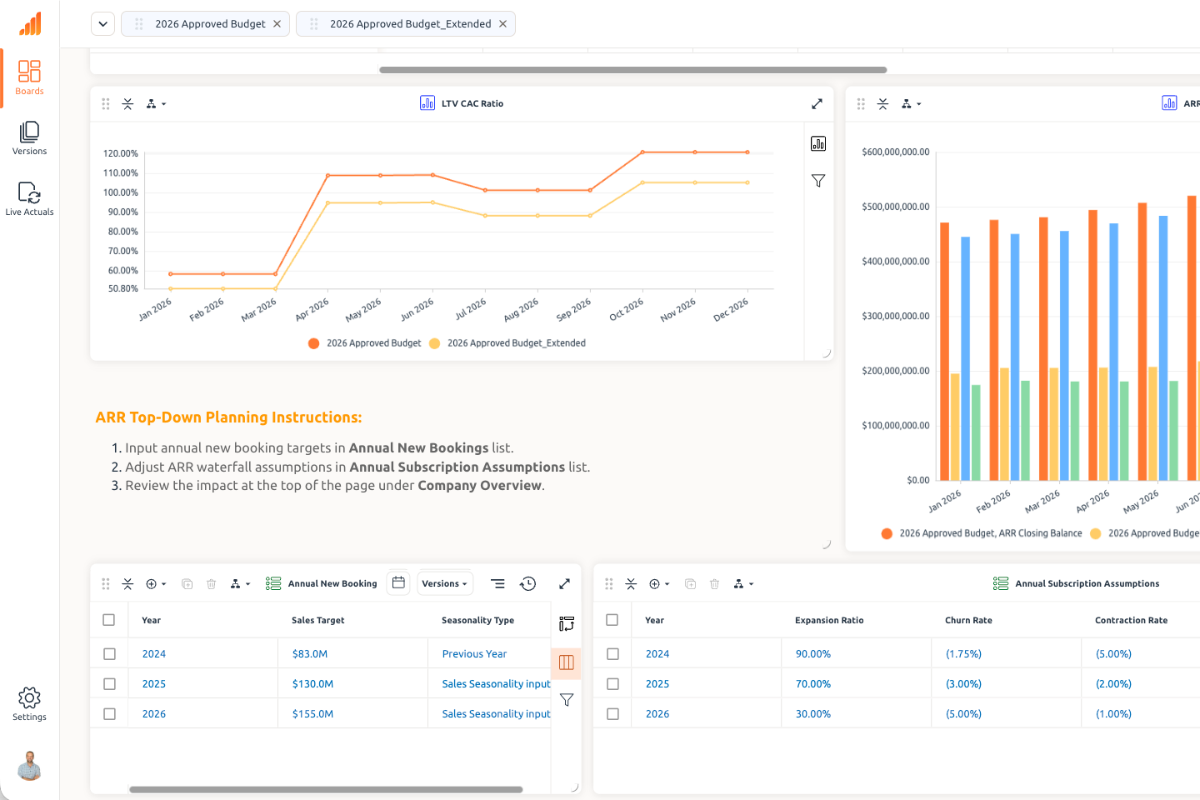
Fintastic revenue planning dashboard with real-time scenario calculations
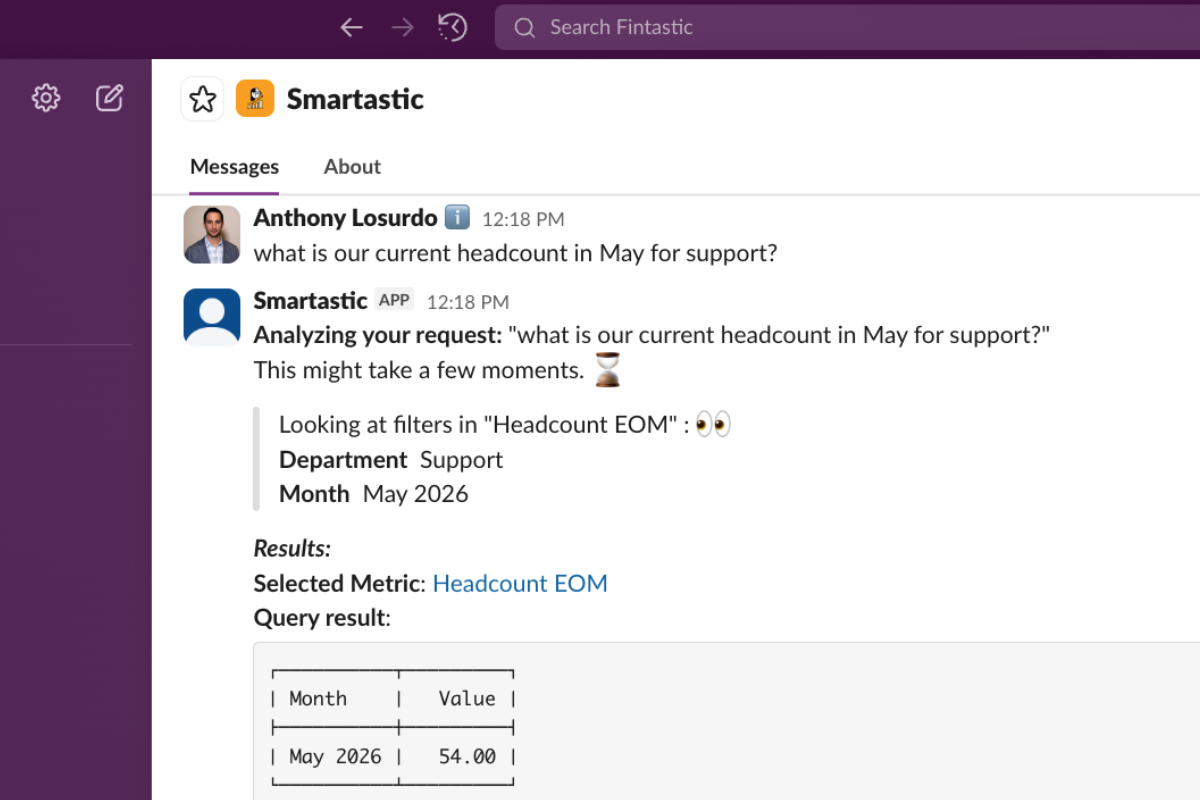
Fintastic AI natural language query interface for planning data analysis

Shorter Cycles, Less Manual Work:

Less time building and maintaining models. Less time reconciling data. Less time waiting for calculations. More time analyzing outcomes and making plans. 

See How it Works

One Version of the Truth, Always:

When every team works from the same model and the same data, the credibility gap between departments disappears. Finance and operations see the same numbers. Budget conversations shift from negotiations to aligned decisions.

See How it Works
Fintastic model builder interface with formula configuration

Scale without Rebuilding:

Add new business lines, entities, regions, or dimensions without restructuring your model. Fintastic handles growth in complexity the way your business handles growth: continuously, without interruption.

See How it Works

Meet Fintastic AI. Built Into the Platform, Not Layered on Top.

Every planning vendor talks about AI. Most of them are layering language models on top of disconnected data and calling it intelligent. Fintastic's AI is different because it operates directly on the same planning model, calculations, and permissions that power your entire planning process. It doesn't guess. It doesn't hallucinate numbers. It answers questions from the live model.

Fintastic AI natural language query interface

NATURAL LANGUAGE

Ask Questions, Get Real Answers

Query your data in natural language. Get answers grounded in actual plan data, not dashboard summaries.

Fintastic AI cross-version intelligence and insights

CROSS-VERSION INTELLIGENCE

Surface What Matters

Identify meaningful changes across versions, scenarios, and time periods. Spend less time looking for the signal and more time acting on it.

Fintastic intelligent formula assistant for model building

FORMULA ASSISTANT

Build Faster

The intelligent formula assistant suggests logic, helps debug errors, and reduces time spent on technical configuration so you can focus on the analysis and plan itself.

Built for Every Team that Touches Planning

Finance, Revenue, Workforce, Marketing, and IT all work from the same model. No reconciliation. No conflicting versions. No waiting for someone else's numbers.

What Happens When Your Planning Platform Finally Keeps Up.

Teams using Fintastic report faster cycles, fewer firefights, and more time spent on the decisions that actually matter.

In my finance career, it’s rare to see an interconnected platform of this scale support iterative scenario planning without sacrificing speed or reliability. Fintastic has been a meaningful addition for Priceline.

Marc Culver
VP of Finance at Priceline

Before implementing Fintastic, business stakeholders couldn't easily create or maintain scenarios. Now there are multiple scenarios that are easily managed and compared, allowing us to plan ahead and make more data-driven decisions.

Emmanuel Blum
Director of FP&A, Claroty.

Artlist reduced time spent on their BVA (budget vs. actual) reporting cycle by 70% - with analysis available at PO-level granularity, always live, with no manual consolidation required.

Evyatar Talev
FP&A Manager at Artlist

Fintastic has been a game changer for our FP&A team! What used to take us days can now be done in mere minutes.

Tom Nguyen
VP Finance at Aviatrix

Enterprise-Ready.

Security and compliance built-in, not bolted on.

Security is native to the Fintastic architecture. Permissions are enforced at the entity and dimension level, and every action is logged end to end.

This is some text inside of a div block.
Checkmark
SOC 2 Type II certified
This is some text inside of a div block.
ISO 27001 certified
This is some text inside of a div block.
AWS infrastructure
This is some text inside of a div block.
Encryption in transit and at rest
This is some text inside of a div block.
Entity and dimension level permissions
This is some text inside of a div block.
Full audit trail
This is some text inside of a div block.
Role-based access controls

Frequently Asked Questions

What is enterprise planning and analysis software?

Planning and analysis software (also known as CPM/EPM software) enables companies to analyze their results and build forecasts, and run scenarios across dimensions like products, regions, entities, cost centers and time horizons. Unlike basic budgeting tools, scalable platforms support cross-functional planning where financial, operational, and workforce plans stay connected within a single environment.

Modern platforms like Fintastic maintain a unified planning model where plans, assumptions, and outcomes remain aligned as business conditions change, without requiring teams to reconcile data across disconnected spreadsheets or modules.

How long does it take to implement Fintastic?

Implementation timelines vary based on the complexity of your planning environment, but Fintastic's self-serve and low-code architecture makes implementation and maintenance an order of magnitude easier. While timelines depend on your planning environment's complexity, our approach significantly reduces the effort required.

Why do planning and analysis systems slow down as companies grow?

Most planning tools were designed for smaller datasets and simpler models. As organizations add business lines, geographies, entities, and dimensions, models become larger and more interconnected. Many platforms struggle because their underlying architecture wasn't built for this level of complexity.

Common symptoms include slow recalculations, model fragmentation (splitting one model into several to maintain performance), limited concurrent users, and scenario planning that takes minutes and even hours instead of seconds. This is an technological core problem, not a feature problem. Fintastic was built architecture-first, specifically to maintain performance as dimensionality and complexity grow.

Can multiple teams plan in the same model at the same time?

Yes. Fintastic supports concurrent planning across multiple users and multiple departments within a single unified model. Multiple users can interact with the same model simultaneously without locking, delays, or version conflicts.

Access controls and dimension/entity level permissions ensure each user or team sees only the data relevant to their role. When one team updates an assumption, every dependent plan across the model updates automatically. This eliminates the reconciliation overhead that slows down cross-functional planning cycles on legacy platforms.

What is the difference between Fintastic and other platforms?

Legacy platforms though well-established platforms with broad functionality use technology that can’t keep up with today’s needs. Users experience performance degradation, model fragmentation, and slow recalculation times.

Fintastic was built from the ground up with a unified architecture designed for enterprise-scale complexity. In direct head to head evaluations, many of our customers saw calculations drop up to a multiplier of 80 from their existing platform or other competitor vendors. Fintastic also supports hundreds of concurrent users without performance degradation, compared to freezes at single digit number of concurrent users on the legacy systems.

What is a unified planning model?

A unified planning model means all business functions (finance, revenue, operations, workforce, marketing, and IT) plans exist within a single connected environment rather than in separate models, spreadsheets, or applications. When revenue assumptions change, the impact flows through to headcount plans, marketing budgets, and P&L forecasts automatically.

Most legacy platforms force organizations to split their business across multiple disconnected models to maintain performance. Fintastic's architecture supports a single model that handles enterprise-scale dimensionality, so teams don't have to choose between model completeness and calculation speed.

Stop Planning Around Your platform. Start Planning Ahead of It.

We value your privacy

We use cookies to enhance your browsing experience, serve personalized ads or content, and analyze our traffic. By clicking "Accept All", you consent to our use of cookies.

Cookie preferences